
4 posts tagged with "OpsPilot"

View all tags

Kubernetes Configuration Risk Checks for Faster Remediation Reviews

· 5 min read

After a cluster configuration check, Zhou, an operations engineer, receives a list of workload issues to verify. He is ready to send it to the application owners, but the review still needs a few details: which namespace each issue belongs to, which fields should change, and whether the current configuration still matches what was checked.

A note that says only "configuration risk detected" sends developers back to the service configuration and leaves operations explaining the evidence for each finding. The team has to piece together that context before it can discuss remediation.

A risk summary and a side-by-side comparison of current and proposed configurations let the team review the affected workloads, findings, and proposed changes together. This simplified review shows how that approach reduces repeated preparation and manual comparisons.
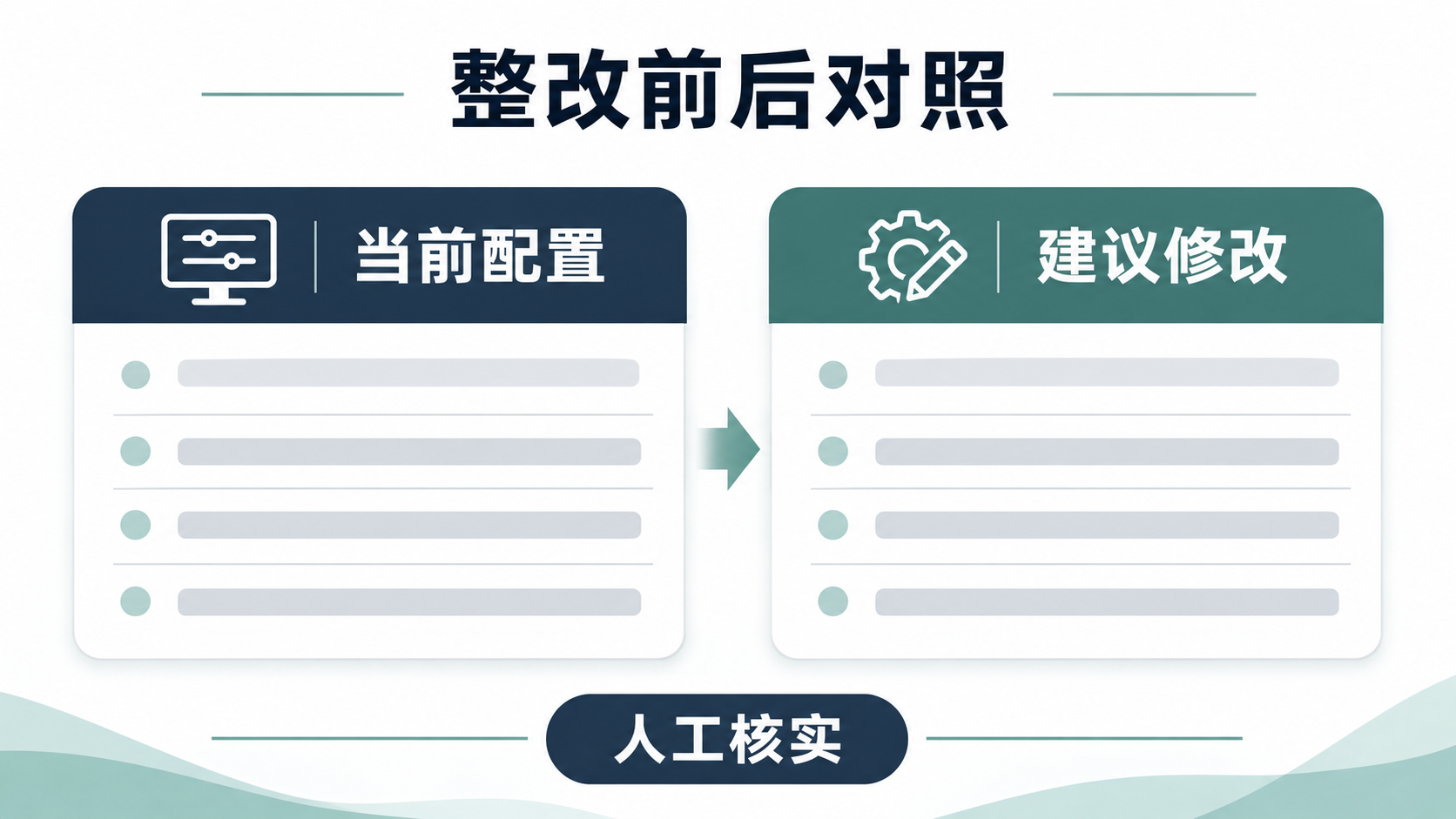
Operations engineers and developers review workload configuration risks and their impact together

Why Do Answers Start to Conflict as a RAG Knowledge Base Grows?

· 8 min read

Two Answers Before the Morning Meeting​

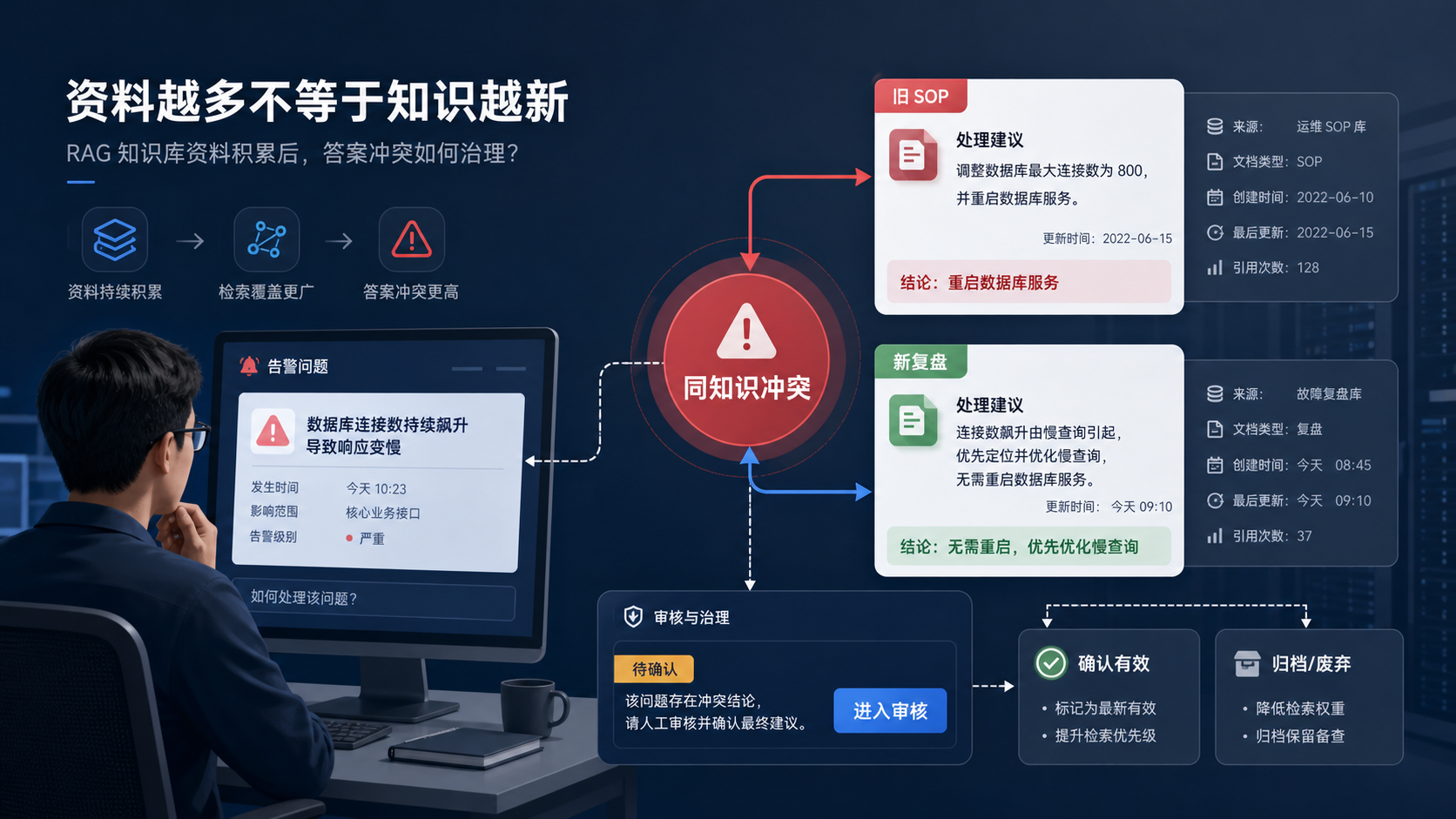
Twenty minutes before the morning meeting, operations lead Xiao Zhou is asked a very specific question: when the same database connection spike alert appears again today, should the on-call team restart the service first, or isolate traffic first?

The team's knowledge base quickly finds two answers. A runbook from three years ago says, "restart and observe." Last month's incident review, however, records that "for this kind of symptom, limit traffic first; restarting directly will expand the impact."

Neither document is nonsense. The first corresponds to an earlier architecture, while the second comes from handling experience after dependency relationships changed. But when both are retrieved in the same search, Xiao Zhou does not get an answer. He gets two choices that both look like answers.

Two knowledge materials give conflicting suggestions for the same alert and wait to enter review governance

When Operations Memory Grows, OpsPilot Tightens It at Write Time

· 9 min read

Before the month-end review, Xiao Zhou asks the AI assistant to organize the runtime profile of the core systems for the month so it can be shared with the on-call team and business owners.

The draft arrives quickly, but something feels wrong at first glance.

The same payment callback jitter is described as having two root causes in the same monthly report: the first half says downstream timeout, while the second half says the connection pool was exhausted. Worse, a temporary workaround written on the day of the incident to stop the bleeding, "bypass a certain downstream service for now," is turned into an ongoing operating recommendation, as if it were a stable practice.

It is not that AI failed to find history. On the contrary, it found too much: conclusions from several RCAs, handoff notes, temporary workaround descriptions, and even an early judgment that was later overturned. The real problem is that those materials were not properly separated when they entered long-term memory.

That is the biggest difference between operations memory and ordinary chat memory: it is not meant to help an assistant understand one individual better. It is meant to maintain a stable business context over time. Monthly reports, runtime profiles, and team troubleshooting framing will all be delivered, reused, and audited. If write-time governance is loose, every later retrieval only amplifies the same error.

The Memory Boundary of an AI Assistant

· 7 min read

Twenty minutes before the morning meeting, operations lead Xiao Zhou gets a very specific question: yesterday the AI assistant organized background information for a payment callback incident, so why did another teammate still get that same context in today's follow-up investigation?

That background is not wrong. It came from the previous day's conversation, and it really did save Xiao Zhou from repeating a lot of context.

But the issue gets stuck somewhere else: is that Xiao Zhou's personal troubleshooting preference, or is it service background that the whole team has actually agreed on?

When an AI assistant remembers context, it solves an efficiency problem. When it decides which context should be remembered for whom, it solves a collaboration boundary problem.